
 中文简体
中文简体 English
Electrostatic Dissipative (ESD) Powder Coating
Industrial-grade protective coating solutions: environmentally friendly, durable, and cost-effective.
Intro to Electrostatic Dissipative (ESD) Powder Coating
Electrostatic Dissipative (ESD) Powder Coatings are specialized formulations engineered to control and safely dissipate static electricity charges built up on a coated surface. Unlike standard insulating powder coatings, ESD powders contain conductive additives (e.g., carbon fibers, conductive pigments) that lower the surface resistivity of the cured film to a specific range (typically 106 to 109 ohms/square). This is critical in industries dealing with sensitive electronics or volatile materials, where uncontrolled static discharge (a spark) can cause catastrophic component failure, dust explosions, or fire hazards.




Conductivity Control and Safety Function
The key function of an ESD coating is to provide a path for static charges to flow safely to ground, preventing a sudden, high-voltage discharge. The coating's surface resistance must fall within the dissipative range; too high, and the charge will build up (insulative); too low, and it becomes fully conductive, which can be dangerous in itself. The formulation involves careful blending of conductive fillers that maintain the desired surface resistivity while preserving the coating's mechanical and chemical protective properties (typically based on Epoxy or Polyurethane). Application requires excellent grounding of the substrate and precise film thickness control, as the film's thickness directly influences the final resistivity reading. ESD coatings are indispensable in "clean" manufacturing environments where both product protection (electronics) and operational safety (explosive dusts/vapors) are paramount concerns.
Specifications
| Property | Standard ESD Value (ANSI/ESD S20.20) |
| Surface Resistivity | 106Ω/sq to 109Ω/sq (Dissipative Range) |
| Chemical Base (Common) | Epoxy or Polyurethane |
| Conductive Agent | Carbon Black, Carbon Nanotubes, or Conductive Pigments |
| UV Resistance | Chemistry dependent (Polyurethane preferred for stability) |
| Abrasion Resistance | Good to Very Good |
| Film Thickness Sensitivity | High (Inconsistent thickness affects conductivity) |
| Aesthetic Finish | Often Matte or Semi-Gloss (Due to conductive fillers) |
| Primary Function | Static Charge Mitigation |
Application Fields
- Electronics Manufacturing: Workbenches, shelving, and transport carts for sensitive components (PCBs, microchips).
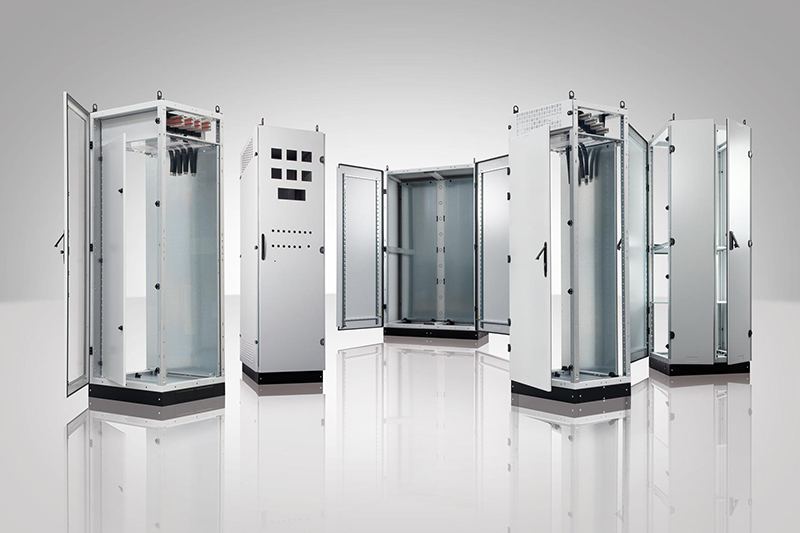
- Clean Rooms and Data Centers: Equipment enclosures and structural metalwork.
- Explosive Environments (e.g., Grain, Chemical): Tools, housings, and components in areas with combustible dusts or volatile organic compounds (VOCs).
- Medical Device Manufacturing: Equipment needing static control to prevent device failure.
- Automotive Electronics Assembly: Fixtures and enclosures used in advanced manufacturing.
Key Characteristicss
- Static Charge Control: Safely dissipates static electricity, preventing sparking.
- Electronic Component Protection: Shields sensitive devices from damage caused by electrostatic discharge.
- Explosion/Fire Prevention: Mitigates the ignition source in environments with volatile materials.
- Durable Protection: Provides the standard corrosion and chemical resistance of the base polymer.
- Precise Resistivity: Formulated to meet the critical 106 to 109Ω/sq range required for safe grounding.
Comparison: ESD vs. Standard Powder
| Feature | ESD Dissipative Powder | Standard Insulating Powder |
| Surface Resistivity | 106 to 109Ω/sq (Dissipative) | >1012Ω/sq (Insulative) |
| Function | Conducts and grounds charge | Traps and builds up charge |
| Additives | Requires conductive fillers | Standard pigments and fillers |
| Aesthetic | Limited colors, typically matte | Unlimited colors, all gloss levels |
| Cost | Higher (Specialty additives and testing) | Standard |
Why choose us
Customization: We have a strong R&D team,and we can develop and produce products according to different requirement of customers.
Cost: We have our own raw material production center.So we can offer the most favourable price and good-quality products directly.
Quality: We have our own testing lab and the most advanced and complete inspection equipment, which can ensure the quality of our products.
Capacity: Our annual production capacity is over 30000 tons, we can meet the needs of different customers with diverse purchase quantity.
Service: We focus on developing high-quality products for top-end markets. Our products are in line with international standards, and are mainly exported to Europe, America, Southeast Asia, South America and other destinations around the world.
Shipment: We are only 200 kilometers away from the Shanghai Port and 230 kilometers to Ningbo port, it is very convenient and efficient to ship goods to any other countries.
Customization
Quality
Capacity
Service
Shipment
Frequently Asked Questions (FAQs)
- Q: Will the ESD property wear off over time or with cleaning?
- A: If the coating is formulated correctly and the conductive elements are distributed throughout the film (not just on the surface), the ESD properties should last the life of the coating. Harsh, abrasive cleaning should be avoided to maintain the film thickness.
- Q: What happens if the surface resistivity is outside the 106 to 109Ω/sq range?
- A: Below 106, the material is too conductive (potentially hazardous). Above 109, it is insulative and static charge will accumulate, defeating the purpose. Precise control is vital.
- Q: Can ESD powder be used on non-metallic substrates?
- A: Yes, but the substrate itself must be connected to a functional grounding point (via a conductive primer or a separate grounding path) for the ESD coating to safely discharge the static build-up.
Selection Guide: ESD Dissipative Powder
Electrostatic Dissipative Powder Coating is the critical choice when:
- The metal component operates in an environment containing sensitive electronics prone to ESD damage.
- The location has a risk of explosion or fire due to volatile dusts or vapors (ignition mitigation).
- The process requires precise surface resistivity to meet global safety standards (e.g., ANSI/ESD S20.20).
- The component itself must safely channel static charge to a grounding mechanism.
- The application requires a durable, cleanable finish that does not build up an electrical charge.