EN
Metal furniture fails in predictable ways. A patio chair loses its gloss under ultraviolet exposure long before its frame ever rusts through. A kitchen cabinet hinge chips at the corner from repeated contact, not from weather. An aluminum window frame expands and contracts through seasonal temperature swings until a rigid, brittle coating finally cracks along the extrusion line. Each of these failure patterns points to a different set of coating requirements, and treating all metal furniture coating as one interchangeable product is where most finishing decisions go wrong.
Powder coating is a dry finishing process in which electrostatically charged resin particles are applied to a grounded metal surface and then cured under heat into a continuous, cross-linked film. Unlike liquid paint, there is no solvent flashing off during application, which is part of why powder coated finishes tend to hold film thickness more consistently across flat panels, tube frames, and extruded profiles alike. But the resin chemistry inside that film, whether it is a standard polyester, a super-durable polyester, a polyester-epoxy hybrid, or an architectural-grade system, changes dramatically how the coating behaves over years of real use.
The chart below summarizes typical relative salt-spray resistance across common resin families, expressed as hours to first visible corrosion under ASTM B117 style accelerated testing. These figures are illustrative ranges drawn from general industry testing practice rather than any single supplier's published data, and they are meant to show the shape of the difference between resin families rather than serve as a specification.
Hybrid systems sit in the middle of that range and are the most common choice for furniture that stays indoors but still needs mechanical toughness, while architectural-grade systems are formulated specifically for continuous outdoor exposure and structural aluminum work. The rest of this guide walks through how those distinctions translate into practical coating choices for indoor furniture, outdoor furniture, and aluminum profiles.
Indoor Metal Furniture Powder Coating is generally built around polyester-epoxy hybrid resins. Because indoor pieces are shielded from direct sunlight and rain, the coating does not need the same level of ultraviolet stability as an outdoor finish. What it does need is hardness, chip resistance, and a smooth, consistent appearance across chairs, desks, cabinet frames, and shelving units that get handled constantly.
Indoor furniture frames benefit from hybrid resin systems that prioritize hardness and a smooth flow finish over UV stability.
Hybrid resins cure at moderate temperatures and flow out into a level, glossy or matte film with fewer visible orange-peel imperfections than many pure polyester systems, which matters on furniture that is viewed up close. They also tend to be more economical than architectural-grade coatings, since indoor pieces do not need to justify the added cost of premium UV stabilizers.
| Attribute | Typical Indoor Specification | Why It Matters |
|---|---|---|
| Film thickness | 60 to 90 microns | Enough coverage for edge protection without excess buildup on fine details |
| Gloss level | Matte to high gloss options | Matches interior design trends without weather constraints |
| Impact resistance | High | Resists chipping from chair legs, drawer edges, and daily contact |
| Cure schedule | Lower temperature, shorter dwell | Faster throughput for high-volume furniture manufacturing |
Common applications include:
Powder coated steel kitchen cabinets are a good example of where indoor-grade coatings are asked to do double duty: they need to resist moisture from cooking steam and cleaning, while also holding a consistent color across large flat panels. A well-formulated hybrid film handles both without needing the heavier UV package built into an outdoor coating.
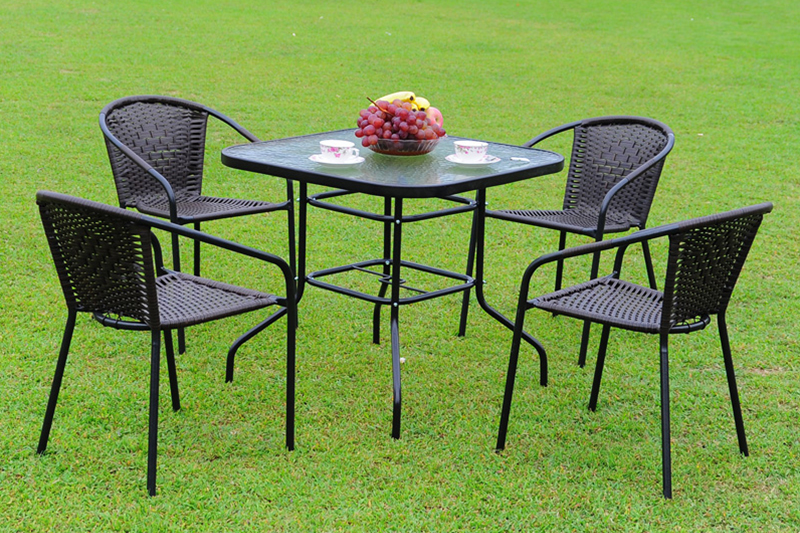
Outdoor metal furniture powder coating has to survive conditions that indoor coatings never encounter: direct sunlight, rain, humidity cycling, and in many climates, freeze-thaw stress. Standard polyester and hybrid resins are not designed for sustained ultraviolet exposure, and over a few seasons outdoors they can chalk, fade, or lose gloss noticeably faster than a purpose-built weather-resistant powder coat.
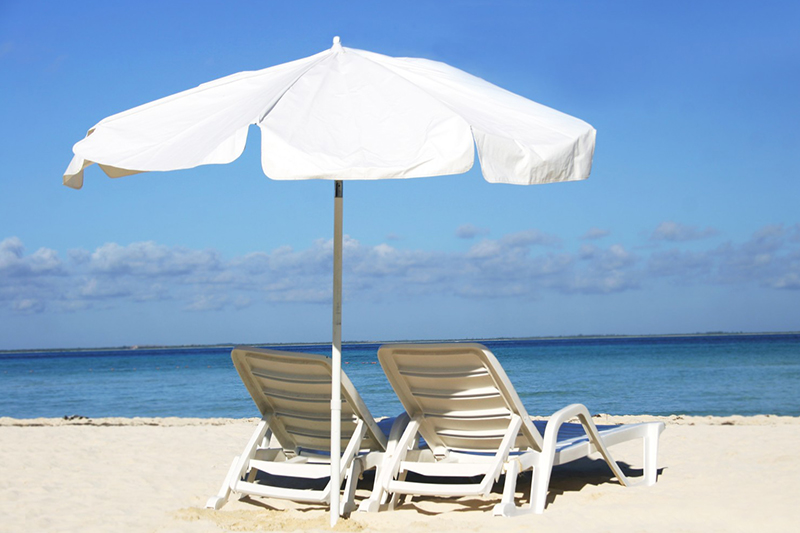
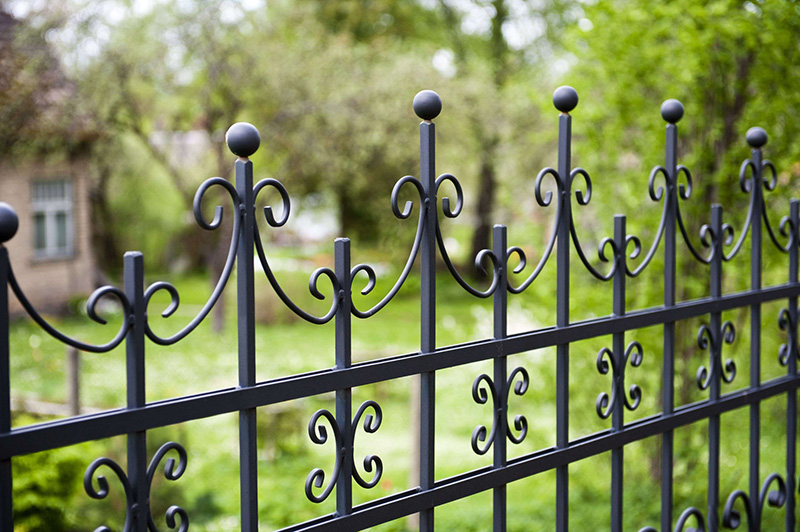
Outdoor furniture relies on super-durable or architectural polyester systems formulated for continuous UV and moisture exposure.
Super-durable and architectural-grade polyester systems address this with resin chemistry and additive packages specifically engineered to slow the breakdown that ultraviolet radiation causes in a polymer film. The line chart below illustrates a typical difference in gloss retention over ten years of outdoor exposure between a standard polyester finish and a super-durable, weather-resistant polyester finish, again using representative industry testing patterns rather than a specific product's data sheet.
The gap between the two curves widens steadily after the first two to three years, which lines up with when most warranty complaints on outdoor furniture actually surface. This is also why manufacturers of umbrellas, railings, patio sets, and other continuously exposed pieces tend to specify a weather-resistant powder coat as a baseline rather than an upgrade.
Outdoor coating failure is rarely sudden. It shows up first as a dulling of gloss, then a slight shift in color tone, and only much later as chalking or cracking, which means gloss retention data is one of the earliest practical signals of long-term coating performance.
Beyond resin selection, outdoor durability also depends on pretreatment quality. A coating with excellent UV resistance will still fail early if the underlying metal was not properly cleaned and chemically converted before powder application, since that pretreatment layer is what gives the powder coat something stable to bond to under repeated wet-dry cycling.
Aluminum profile powder coating is a distinct category from flat-panel furniture coating because extruded aluminum shapes present different geometry: long runs, sharp internal corners, and thin wall sections that need even film coverage without pooling or thin spots. Profiles are also frequently used in load-bearing or semi-structural roles, such as window and door frames, railings, and furniture legs, where dimensional stability under temperature change matters as much as surface appearance.
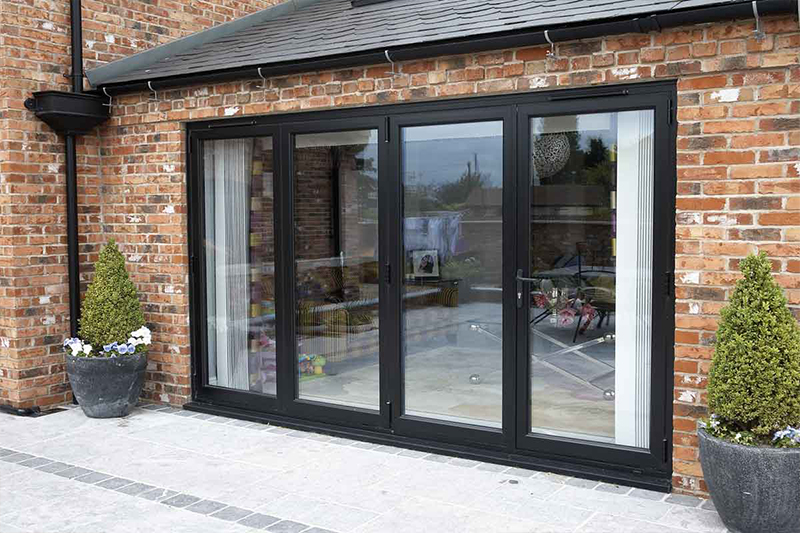
Extruded aluminum profiles need consistent film thickness across sharp corners and long straight runs alike.
Recommended film thickness varies by how exposed and how structurally demanding the application is. The column chart below shows a typical range across four common uses of coated aluminum profile, from lightly used furniture framing through continuously exposed outdoor railing.
Because aluminum extrudes into consistent cross-sections, manufacturers can standardize hanging jigs and electrostatic gun paths for a given profile, which helps maintain even coverage inside grooves and around fins. This is one of the practical advantages of coating aluminum profile in-line during extrusion rather than treating each finished furniture piece as a one-off shape.
Regardless of whether the substrate is a stamped steel chair frame or an extruded aluminum profile, the underlying process follows the same core stages. Understanding these stages helps explain why two coatings using the same resin can still perform differently in the field: much of the variance comes from how well pretreatment and cure were controlled, not just which powder was used.
Pretreatment removes oils, oxides, and mill scale from the metal surface and, in most systems, deposits a thin conversion layer that promotes adhesion and adds a first layer of corrosion resistance beneath the powder film itself. Powder is then applied as a dry, electrostatically charged material that clings to the grounded part before being melted and cross-linked in a curing oven, typically in the range used for architectural-grade powder coatings. Controlled cooling afterward prevents thermal shock that could otherwise introduce stress into the cured film.
No single coating system wins on every attribute, which is exactly why indoor furniture, outdoor furniture, and aluminum profile work each tend to default to different resin families. The radar chart below compares three representative coating categories across five performance attributes, scored on a relative 1 to 5 scale based on general industry testing patterns.
The outdoor weather-resistant system scores highest on UV resistance and color retention, which is exactly the profile needed for continuously exposed patio and railing furniture. The indoor hybrid scores strongest on cost efficiency and holds up competitively on impact resistance, reflecting its role as the practical default for furniture that stays under a roof. The architectural aluminum system trades a small amount of cost efficiency for stronger chemical resistance, which matters for facade and window applications exposed to pollutants, cleaning agents, and coastal salt air.
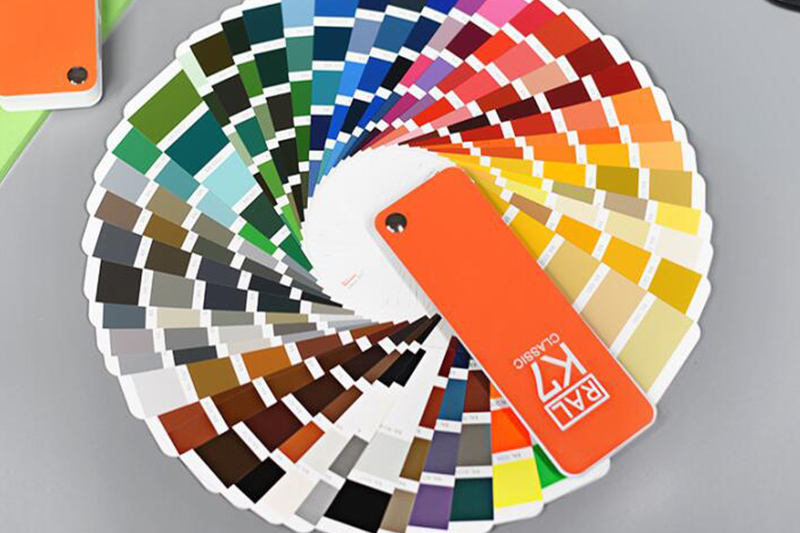
Custom color powder coating is one of the practical advantages powder systems have over many liquid alternatives: because color is introduced at the resin and pigment blending stage rather than through a solvent-based tint, manufacturers can hold tighter batch-to-batch color consistency across large production runs. This matters for furniture lines sold across multiple markets, where a customer expects a matching color years after their original purchase.
Texture is a separate variable from color and gloss, and it affects both appearance and practical performance. A textured or fine-matte finish, for example, tends to hide minor surface imperfections and fingerprints better than a high-gloss smooth finish, which is one reason textured coatings are common on handles, brackets, and other frequently touched hardware.
| Finish Type | Visual Character | Common Use |
|---|---|---|
| High Gloss | Reflective, sharp highlights | Decorative indoor furniture, display fixtures |
| Matte | Soft, non-reflective surface | Modern interior furniture, minimalist frames |
| Fine Texture | Slight surface grain, hides fingerprints | Handles, brackets, high-touch hardware |
| Metallic | Fine metal flake within the film | Premium furniture legs, architectural trim |
| Wrinkle Finish | Deep textured crinkle pattern | Industrial equipment housings, heavy-use frames |
Scratch-resistant metal coating formulations often combine a harder cross-link density with a slightly textured surface, since texture physically diffuses light around minor surface marks, making small scratches far less visible than they would be under a mirror-smooth gloss finish.
Selecting a coating system comes down to matching resin chemistry, film thickness, and finish type to the actual operating environment and handling conditions the furniture will face. The following checklist summarizes the questions worth answering before finalizing a specification.
For furniture that will stay indoors, a polyester-epoxy hybrid at standard film thickness generally offers the best balance of cost, hardness, and finish quality. For anything exposed to sun and rain, a super-durable or architectural-grade weather-resistant powder coat is worth the added cost given how much faster standard coatings lose gloss outdoors. For aluminum profile work, thickness and coverage consistency across the extrusion geometry matter as much as resin selection, particularly for structural or curtain wall applications where the coating also contributes to long-term corrosion protection of load-bearing components.
The main difference is ultraviolet stability. Outdoor coatings use super-durable or architectural-grade polyester resins formulated to resist gloss loss and fading under sustained sunlight, while indoor coatings can prioritize hardness and finish quality using more economical hybrid resins since UV exposure is not a factor.
Under normal outdoor exposure, a well-applied weather-resistant powder coat can maintain acceptable gloss and color for roughly ten years or more, though this depends heavily on climate intensity, pretreatment quality, and how much direct sun and salt exposure the piece receives.
The same general resin families can be used on both substrates, but pretreatment chemistry differs since aluminum typically requires a different conversion coating process than steel to achieve comparable adhesion and corrosion resistance.
Gloss level itself does not determine hardness, but matte and textured finishes tend to make minor surface scratches less visually noticeable than a high-gloss smooth finish, even when the underlying film hardness is similar.
Recommended thickness varies by application, generally ranging from around 60 microns for lightly used furniture framing up to 120 microns or more for continuously exposed structural or railing applications.


Copyright © Zhejiang Huacai Advanced Material CO., LTD. All Rights Reserved. Powder Coating Manufacturers

 中文简体
中文简体 English