EN
Powder coating is a dry finishing method that applies a free-flowing, finely ground pigment and resin mixture onto a metal or compatible substrate. Unlike liquid paint, the powder carries no solvent carrier. Instead, it is applied electrostatically so that charged particles cling to a grounded workpiece, then cured under heat so the particles melt, flow together, and chemically cross-link into a continuous film. The result is a finish that is thicker, more uniform, and generally more resistant to chipping, scratching, and corrosion than conventional wet paint.
When people ask what powder coating means in a practical sense, the simplest answer is this: it is a coating process built around dry powder and heat rather than liquid and evaporation. That single difference changes almost everything downstream, from how the coating is applied on a production line to how long the finished part will last in the field. Because the process eliminates solvent evaporation, it also produces far less airborne volatile emission during application, which is one reason powder coating has become the default finishing method across appliance manufacturing, automotive components, architectural aluminum, furniture, and industrial equipment.
This guide walks through how the process actually works step by step, what separates the major powder chemistries from one another, how powder coating compares to liquid paint on measurable performance criteria, and how durable a properly applied powder finish really is under different environmental conditions.
Every powder coating line follows the same underlying logic, even though equipment scale varies from a small job shop to a fully automated conveyor system. The sequence below reflects the standard workflow used across most industrial applications.
The preparation stage is often underestimated, yet it determines most of the coating's long-term performance. Any residual oil, rust, or oxide layer left on the substrate becomes a weak point where the film can lose adhesion later, regardless of how well the powder itself was formulated. After cleaning, parts pass through a spray booth where powder is fed through a gun that imparts an electrical charge to each particle. Because the workpiece is grounded, charged particles are drawn toward it and wrap around edges and recessed features more evenly than liquid spray typically allows.
Overspray that does not land on the part is usually reclaimed and reused, which is one of the material-efficiency advantages discussed further below. Once the coated part enters the curing oven, the powder melts, flows into a smooth continuous layer, and undergoes a chemical reaction that permanently locks the film's structure. This cross-linking step is what gives cured powder coating its hardness and chemical resistance; it is not simply a matter of the coating drying the way liquid paint does.
Not all powder coatings behave the same way once cured, because the resin system used in the formulation determines the coating's strengths and limitations. Three resin families cover the large majority of industrial and architectural applications.
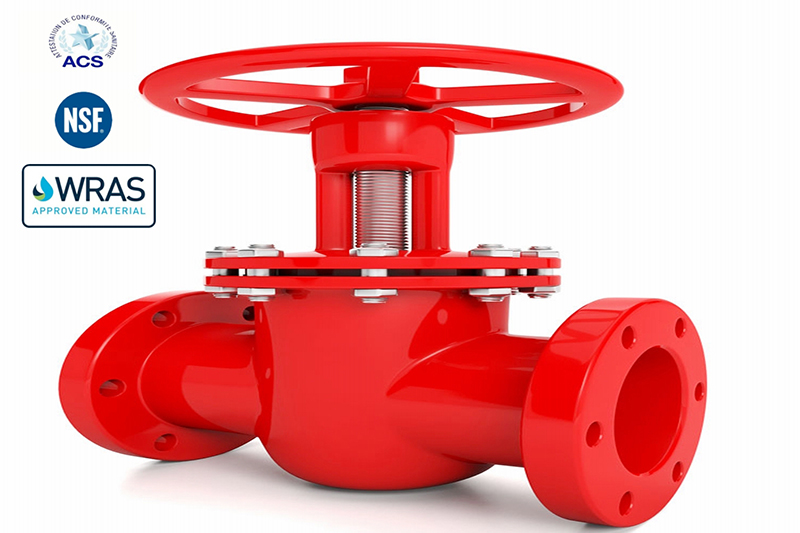
Known for outstanding hardness, chemical resistance, and adhesion to metal substrates. Their main limitation is a tendency to chalk and lose gloss under prolonged direct sunlight, which is why they are typically specified for indoor components such as electrical enclosures, appliance interiors, and industrial machinery.

Formulated for strong outdoor performance, including resistance to UV degradation, weathering, and color fade. This makes polyester systems the standard choice for outdoor furniture, fencing, architectural trim, and automotive underbody components where sunlight exposure is constant.
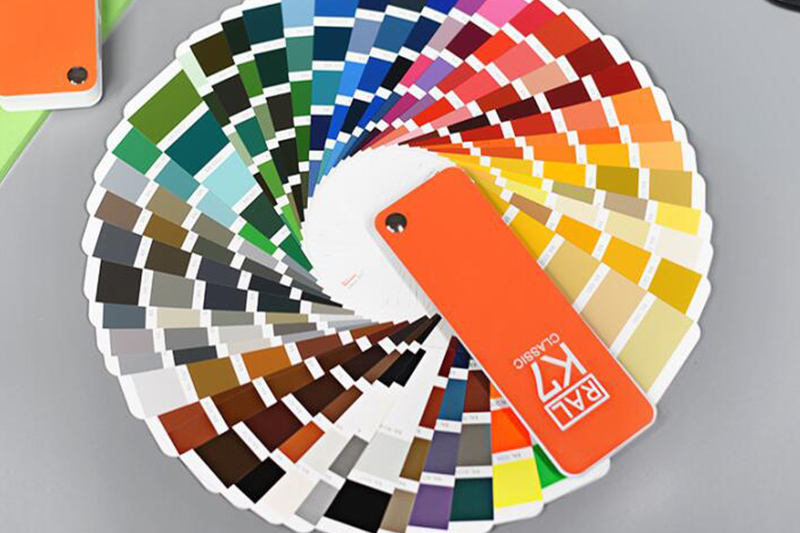
A blended resin system designed to combine the chemical resistance of epoxy with a portion of polyester's outdoor tolerance. Hybrids are commonly used indoors where moderate chemical exposure and mechanical durability both matter, offering a practical middle ground between the other two chemistries.
Selecting among these three is rarely about which one is universally "best." It is about matching resin behavior to the environment the finished part will actually live in. A control panel that never sees sunlight gains little from polyester's UV stability, while an outdoor railing coated in straight epoxy will likely chalk within a single season of sun exposure.
Manufacturers evaluating a finishing method usually compare powder coating against liquid paint across a small set of measurable factors: how much material actually ends up on the part, how much waste and emission the process generates, and how consistent the finish looks from one part to the next. The chart below summarizes typical relative performance reported across industrial finishing operations.
Two of the biggest differences come from how each method handles overspray and solvent. Powder that misses the part on a properly configured line can typically be captured and fed back into the system, which is why utilization rates are so much higher than with liquid paint, where oversprayed material is simply lost. Because powder coating carries no solvent, it also does not require the extended flash-off and evaporation time liquid systems need before curing, which shortens overall cycle time on high-volume lines.
Liquid paint retains an advantage in a few narrower situations, particularly ultra-thin decorative finishes, small touch-up jobs, and substrates that cannot tolerate oven-curing temperatures, such as certain plastics or wood composites. For most metal fabrication and industrial part finishing, however, powder coating has become the default because it delivers a thicker, harder film with less waste per part produced.
Durability is the single most common question buyers ask, and the honest answer is that it depends heavily on resin chemistry and exposure conditions. The line chart below illustrates a representative durability trend, scored on a relative resistance index, as exposure conditions move from mild indoor environments to aggressive coastal or marine settings.
Two patterns stand out. First, all three chemistries perform reasonably well in mild, indoor conditions, so durability differences are minor until UV exposure and moisture enter the picture. Second, epoxy's resistance index drops fastest once outdoor exposure increases, which matches the chalking behavior epoxy is known for in the field. Polyester holds its resistance level furthest into severe and coastal conditions, which explains why it dominates architectural and outdoor furniture applications despite epoxy's superior chemical resistance in sheltered environments.
Independent of chemistry, film thickness and cure quality also drive real-world durability outcomes. A powder coating cured below its specified temperature or time window will not fully cross-link, leaving a softer, less chemical-resistant film even if the correct resin was chosen. This is why reputable finishing operations validate cure with time-temperature profiling rather than relying on visual inspection alone.
Adoption levels vary by industry based on part geometry, production volume, and exposure requirements. The column chart below reflects typical adoption levels reported across common finishing sectors.
Architectural aluminum leads adoption largely because outdoor exposure requirements make polyester's weather resistance a near-necessity, and because extrusion profiles are well suited to consistent electrostatic coverage. Appliance manufacturing follows closely, where high-volume automated lines benefit from powder coating's fast cure cycles and low rejection rates. Furniture shows comparatively lower adoption mainly because some frame materials, such as certain woods and composites, cannot tolerate oven curing temperatures and require alternative finishing methods.
Because no single resin system wins on every property, a multi-dimensional comparison is more useful than a single overall score. The radar chart below scores each system across five common selection criteria on a relative scale.
The pattern confirms what field experience already suggests: epoxy leads on chemical resistance and adhesion but trails badly on outdoor durability, polyester trades some chemical resistance for strong UV performance, and hybrid systems sit in between on nearly every axis rather than excelling at any single one. This is precisely why hybrids are marketed as balanced, general-purpose systems rather than specialists.
Buyers evaluating powder coating quality typically reference a small set of standardized test methods rather than relying on visual judgment alone. The table below summarizes the tests most commonly cited in technical data sheets and purchase specifications.
| Test Property | What It Measures | Typical Benchmark |
|---|---|---|
| Salt Spray Resistance | Corrosion creep from a scribe line under salt fog exposure | 500 to 1000+ hours |
| Cross-Hatch Adhesion | Film adhesion to substrate via grid cut test | No flaking at rating 5B |
| Pencil Hardness | Resistance to surface scratching | 2H to 4H |
| Impact Resistance | Film integrity after direct and reverse impact | No cracking at 160 in-lb |
| Gloss Retention (UV) | Gloss level maintained after accelerated weathering | Varies by resin, higher for polyester |
These benchmarks exist because coating performance is not something that can be reliably judged by eye at the point of application. A film can look perfectly smooth and glossy immediately after curing yet fail adhesion or corrosion testing months later if surface preparation or cure profile fell short of specification. Requesting test data tied to a recognized method is a more reliable way to evaluate a coating supplier than relying on appearance alone.
Beyond the comparative data already covered, several practical advantages explain why powder coating has become the default finishing method across so many industries.
None of these advantages make powder coating universally superior. Parts with heat-sensitive substrates, extremely thin decorative requirements, or very low production volumes may still be better served by liquid finishing. The right choice always depends on substrate material, part geometry, expected exposure, and production volume rather than a single "best" answer.
Selecting a coating system comes down to answering a short set of practical questions before specification. Where will the part live once installed, and how much direct sunlight or moisture will it see. What chemical exposure, if any, does the environment involve, such as cleaning agents, fuels, or industrial solvents. How much mechanical stress, impact, or flexing will the coated surface experience during normal use. And finally, what cosmetic requirements apply, including gloss level, texture, and long-term color stability.
For predominantly indoor parts with chemical exposure, epoxy powder coatings generally deliver the best balance of hardness and resistance. For anything installed outdoors or exposed to sustained sunlight, Polyester powder coating is the more defensible choice given its stronger UV and weathering performance. Where a project needs a single system that performs adequately across mixed indoor and light outdoor conditions, Polyester/epoxy (hybrid) powder coatings offer the most practical middle ground without requiring two separate specifications.
It is a dry finishing process where charged powder particles are sprayed onto a grounded part and then cured with heat, forming a durable, continuous film without any solvent carrier.
It means the part's finish was applied through the powder coating process rather than liquid paint, typically indicating a thicker, more chip-resistant surface layer.
Yes, provided the correct resin chemistry is selected. Polyester and hybrid systems are formulated for outdoor exposure, while straight epoxy is generally recommended for indoor applications only.
Service life varies with resin type, film thickness, cure quality, and environmental exposure, but well-applied outdoor-grade systems commonly perform for many years before visible degradation appears.
Generally no. Proper surface preparation, including removal of prior coatings and contamination, is required for the new film to achieve reliable adhesion and expected durability.
Because oversprayed powder that does not land on the part can typically be collected and reused, whereas oversprayed liquid paint is generally lost during application.


Copyright © Zhejiang Huacai Advanced Material CO., LTD. All Rights Reserved. Powder Coating Manufacturers

 中文简体
中文简体 English