EN
In high-traffic industrial environments, safety railings are not merely physical barriers; they are visual communication tools. The application of guardrail powder coating serves a dual purpose: protecting the underlying metal from corrosion and ensuring that hazards are immediately identifiable to personnel and vehicle operators. Unlike traditional liquid paint, powder coating provides a thicker, more uniform finish that resists chipping and fading under heavy use.
For B2B procurement managers and facility safety officers, selecting the correct coating is a matter of compliance and risk management. Safety standards, such as those defined by international safety color codes, mandate specific hues for different types of hazards. A high-quality finish ensures that these railings remain vibrant for years, reducing maintenance cycles and total cost of ownership in demanding settings like warehouses, chemical plants, and loading docks.
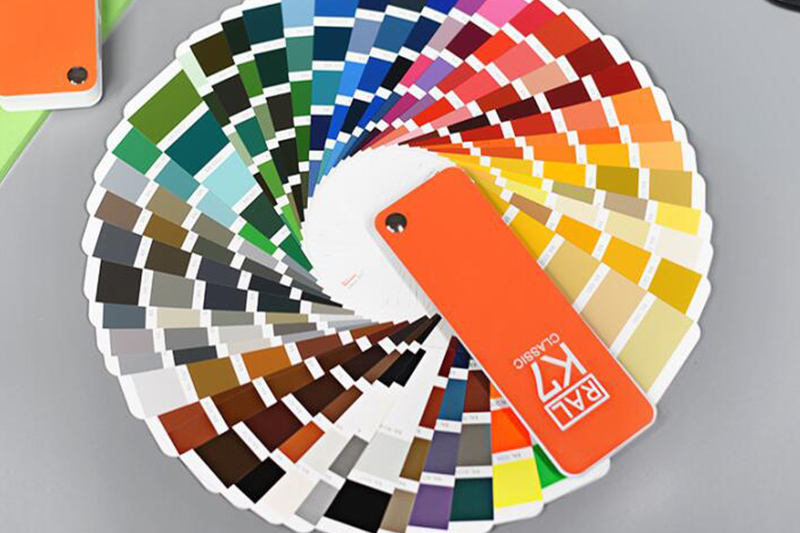
Visibility is measured by how quickly the human eye can distinguish an object from its background. When specifying colors for industrial barriers, the following options are considered industry standards for maximum impact:
Safety Yellow is the most widely used color for guardrail powder coating. It is specifically designed to caution against physical hazards such as striking against, tripping, or falling. Its high reflectance makes it visible even in low-light conditions common in large-scale storage facilities.
Orange is traditionally used to mark dangerous parts of machines or energized equipment. On guardrails, it signifies a higher level of alert than yellow. It is particularly effective in outdoor environments where it provides a sharp contrast against gray concrete or green landscapes.
While often reserved for fire protection equipment, red powder coating is used on railings near emergency exits or high-risk zones where immediate "stop" or "danger" recognition is required. It has a lower reflectance than yellow but carries the strongest psychological command for caution.
A safety railing's effectiveness is tied to its ability to withstand environmental stressors. Procurement decisions should be based on the technical properties of the powder formulation to ensure the safety color does not degrade.
| Technical Property | Performance Standard | Industrial Benefit |
|---|---|---|
| UV Resistance | High (Polyester Based) | Prevents color chalking and fading |
| Impact Resistance | Up to 160 inch-lbs | Resists dents from forklift contact |
| Salt Spray Test | 1000+ Hours | Corrosion protection in humid zones |
| Pencil Hardness | 2H - 3H | Scratch resistance during transit |
The color itself is only one component of visibility. The finish type plays a critical role in how light interacts with the railing surface.
High-gloss finishes (80-90% gloss) are preferred for safety railings because they reflect the maximum amount of light. This creates a "glint" effect that catches the eye of workers. However, in areas with excessive overhead glare, a semi-gloss finish may be used to maintain color clarity without blinding reflections.
For extreme environments, such as underground mines or night-shift loading zones, powder coatings can be formulated with fluorescent pigments. These pigments convert UV light into visible light, making the guardrail appear to "glow," significantly increasing the safety margin for operators.
The success of a guardrail powder coating project depends on the substrate preparation. Different metals require specific pre-treatment protocols to ensure the high-visibility color adheres permanently.
When sourcing powder for large-scale safety installations, buyers must look beyond the initial price per kilogram. The "hidden" value lies in the efficiency of the coating process and the longevity of the finish.
High-quality powders offer superior transfer efficiency, meaning more powder sticks to the railing and less is wasted in the spray booth. For a project involving 5,000 meters of railing, a 10% increase in transfer efficiency can lead to significant cost savings in raw material procurement.
For large facilities, railings may be installed in phases. It is critical that the "Safety Yellow" applied in Phase 1 matches the "Safety Yellow" applied six months later in Phase 2. Professional-grade powder manufacturers utilize digital color spectrophotometers to ensure a Delta E variance of less than 0.5, ensuring visual uniformity across the entire site.
Industrial railings are often exposed to harsh chemicals, cleaning agents, and fluctuating temperatures. A robust guardrail powder coating must be chemically resistant to ensure that industrial degreasers do not strip the color or reduce the gloss of the safety markers.
In outdoor applications, Super Durable Polyester (SDP) formulations are recommended. These contain higher levels of stabilizer that protect the pigment molecules from breaking down under intense sunlight, maintaining the "High-Visibility" status of the railing for 10-15 years without the need for repainting.
Powder coating provides a much thicker and more durable layer (typically 60-80 microns) compared to liquid paint. It is more resistant to the mechanical impacts and abrasions typical in industrial zones, ensuring the safety color remains visible longer.
Standard polyesters may fade over several years, but using a UV-stabilized or "Super Durable" polyester powder ensures the color remains within the high-visibility spectrum even after prolonged outdoor exposure.
For the best results, the old paint should be removed via sandblasting. Powder coating requires a clean, conductive surface to bond properly and provide the smooth, high-visibility finish required for safety compliance.
While specific gloss percentages aren't always mandated, high-gloss finishes are the industry standard because their reflective properties significantly enhance the detection distance for workers and drivers.


Copyright © Zhejiang Huacai Advanced Material CO., LTD. All Rights Reserved. Powder Coating Manufacturers

 中文简体
中文简体 English