EN
An exhaust manifold that reaches 600°F during operation. A barbecue grill lid that holds heat all afternoon. A motor housing that runs continuously at 250°F. These are the situations where powder coat temperature resistance stops being a spec-sheet detail and becomes a real production concern. If you buy coating for metal components that see sustained heat or periodic thermal spikes, you need to know exactly what your powder can handle—and what it cannot.
Powder coating is not a single material with one heat limit. It is a family of thermoset or thermoplastic formulations, and each resin system has a distinct thermal ceiling. Temperature resistance is normally described in two ways: continuous service temperature (the heat the coating can sustain for thousands of hours) and peak or intermittent temperature (short excursions during start-up, shutdown, or process surges).
A coating that survives a 30-minute spike at 400°F may degrade quickly if the same temperature is held for 24 hours. So when you evaluate powder coat temperature resistance, always ask for both ratings. The continuous rating is the number that determines long-term performance; the peak rating only tells you whether the coating can tolerate brief thermal events without immediate failure.
Standard powder coatings—epoxy, polyester/epoxy hybrid, and conventional polyester—are designed for decorative and protective applications where surface temperatures stay below roughly 250°F (121°C). Their physical properties, including hardness, adhesion, and color, begin to change above that threshold. The table below shows typical continuous-service limits for common resin systems.
| Resin System | Continuous Service Limit | Notes |
|---|---|---|
| Epoxy | 200°F (93°C) | Excellent corrosion resistance, but poor exterior stability and limited heat tolerance. |
| Polyester/Epoxy Hybrid | 250°F (121°C) | Good interior performance; used on furniture, machinery, and fixtures. |
| Standard Polyester | 250°F (121°C) | Better weather resistance; common on outdoor metal parts. |
| Super Durable Polyester | 300°F (149°C) | Increased UV stability; slightly better heat stability than standard polyester. |
Practical rule: If your part will see a continuous surface temperature above 250°F, do not rely on a standard powder coating. Choose a specialty formulation designed for high-heat service.
When continuous temperatures exceed 300°F, you need a specialty formulation. High-heat-resistant powder coatings typically rely on silicone resins or modified epoxy systems, and some are reinforced with ceramic or glass-like fillers. They can protect metal components at continuous temperatures of 600°F (316°C) and above, with peak ratings often reaching 800–1000°F (427–538°C) depending on the formulation and substrate.
At Zhejiang Huacai, high-temperature-resistant powder coatings are formulated for applications like exhaust systems, heat exchangers, gas turbine components, and cooking equipment. If your parts see repeated thermal cycling or continuous high heat, this high-temperature resistant powder coating is worth evaluating.
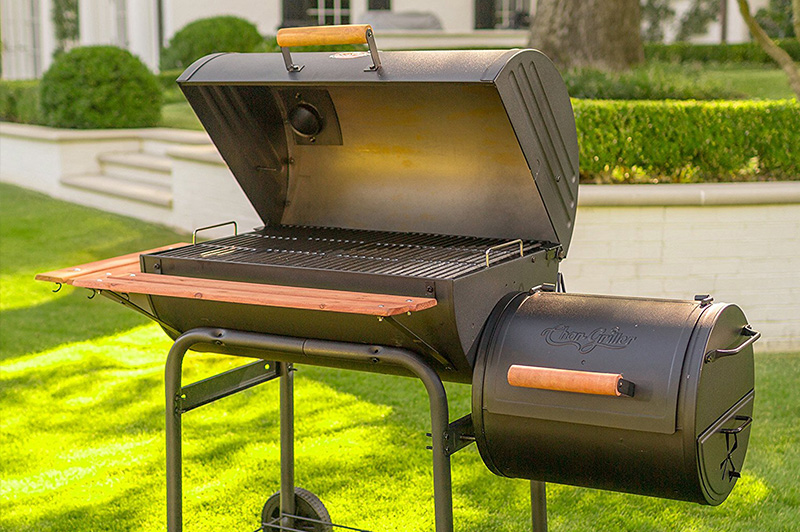 High Temperature Resistant Powder Coating for Industrial Heat ApplicationsThis powder coating offers excellent weather resistance and is designed for high-heat equipment like exhaust systems and ovens. Its silicone-based formulation ensures durability under thermal cycling, making it a reliable choice for demanding industrial environments.View Product →
Silicone-based formulations are the standard for the highest service temperatures. They cure through a distinct mechanism and create a flexible, heat-stable film that resists oxidation. Ceramic-reinforced powders add extra durability against thermal expansion and mechanical wear, making them suitable for industrial ovens, grills, and exhaust stacks.
For lower-temperature but still demanding outdoor environments, super-durable polyester powder coatings can extend service life while maintaining color and gloss. They do not have the same heat ceiling as silicone, but they remain a good choice for components that see moderate heat plus UV exposure.
Selecting the right system starts with three questions: What is the maximum continuous temperature? Does the part see thermal cycling or direct flame? What is the substrate material? The answers determine whether you need a silicone-based high-temperature powder, a ceramic-reinforced formulation, or a standard polyester with a protective top coat.
The golden rule: Specify continuous temperature, not just peak temperature. A part that occasionally hits 500°F but normally runs at 200°F has very different coating requirements from a part that runs at 500°F for eight hours a day.
Curing schedule matters too. Powder coatings require oven cure at specific temperatures and times. A high-temperature powder that needs a 400°F cure may be difficult to apply on assembled components containing heat-sensitive parts. In that case, a low-temperature cure powder might be a better fit, or you may switch to liquid coating. This is why discussing the full production cycle—not just the service temperature—is essential.
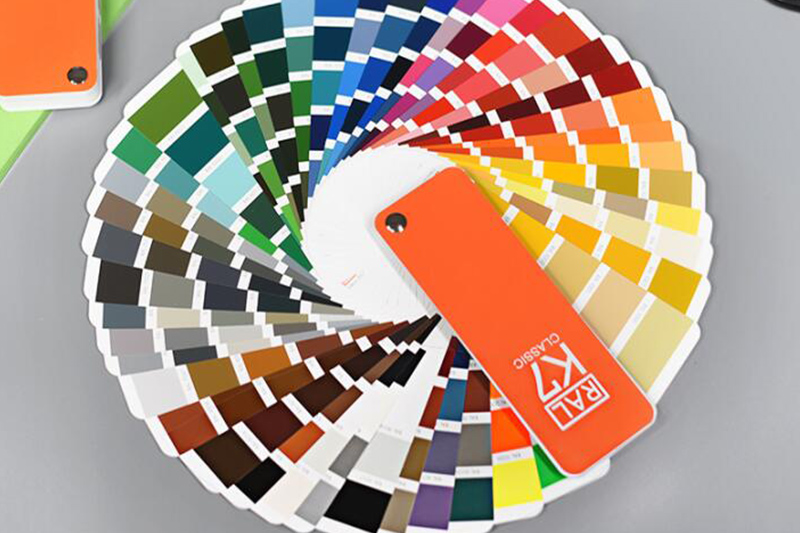
Another critical factor is color stability. At high temperatures, many pigments degrade or darken. Look for formulations using heat-stable inorganic pigments. If you need a specific RAL color, verify that the color is stable at your continuous service temperature. This high-temperature resistant powder coating page explains the formulation considerations in more detail.
The practical question is always "where will this coating work?" High-temperature powder coatings are used on:
Each application has its own coating preference. A grill interior that sees grease and high heat needs excellent chemical resistance alongside thermal stability. An exhaust manifold needs resistance to vibration and thermal expansion. A heat exchanger may need high thermal conductivity, which means the coating must be thin and uniform. Talk to your powder supplier about the specific environmental conditions before you order.
Standard powder coatings typically handle continuous temperatures up to 250°F (121°C). Short peaks to 350°F (177°C) may be tolerated for brief intervals, but continuous exposure above 250°F will cause yellowing, brittleness, and eventual loss of protection.
Standard powder coatings are not. You need a specialty high-temperature formulation, usually silicone-based or ceramic-reinforced, rated for continuous service at 600°F (316°C) or higher. These coatings are designed to withstand thermal expansion, oxidation, and vibration in exhaust applications.
Yes. High-temperature powders typically have higher cure temperatures than standard powders. The exact schedule must be matched to the substrate and part geometry. Incorrect curing can leave the film undercured, reducing both heat resistance and adhesion.
It depends on the galvanizing process and the coating system. Zinc-rich primers can improve the adhesion and corrosion resistance on galvanized surfaces, but the primer itself must be compatible with the high-temperature top coat. Always test the full system on representative samples.
Powder coat temperature resistance is not a single number. It is a combination of resin chemistry, formulation, substrate, curing parameters, and the real-world conditions your part will face. By understanding the thermal limits of standard systems and the options available in specialty high-temperature powders, you can avoid premature coating failure and choose a coating that will protect your metal components for years to come.


Copyright © Zhejiang Huacai Advanced Material CO., LTD. All Rights Reserved. Powder Coating Manufacturers

 中文简体
 English