EN
A technical deep-dive into functional properties, weathering resistance, and chemical compatibility across powder coating material types. Optimize your finish for long-term performance.
Selecting the correct polyester powder coating series or epoxy powder coating series is not just about color or gloss. It directly impacts resistance to UV degradation, chemical attack, and mechanical stress. powder coating materials vary at the molecular level: polyester resins excel outdoors, epoxy networks provide superior adhesion and corrosion blocking, while hybrids bridge functional gaps. This guide delivers a side-by-side comparison using real industrial metrics, helping you align types of powder coating finishes with environmental demands.
Understanding functional properties of epoxy coatings and the weatherability of polyester powder is non-negotiable for specifiers. Whether you need a powder coating finish type for architectural aluminum or chemical storage tanks, matching the series to the service environment doubles life expectancy.
Polyester resins are the backbone of exterior-grade finishes. Their aromatic rings are designed to absorb UV radiation without chain scission, delivering outstanding weatherability of polyester powder. This series is the top choice for outdoor architecture, automotive parts, and garden equipment.
For applications requiring vibrant colors and gloss retention, the polyester powder coating series remains the default. However, polyester alone offers moderate chemical resistance compared to epoxies. That's where hybrid and epoxy series step in.
When functional properties of epoxy coatings are analyzed, three pillars emerge: exceptional adhesion to metal, resistance to acids/alkalis, and cathodic disbondment prevention. Epoxy networks are densely crosslinked, forming a barrier that outperforms all other powder coating material types in immersion or high-humidity scenarios.
Chemical resistance comparison data shows epoxy withstands 10% H2SO4 and 20% NaOH for 30 days without blistering, while polyester fails within 7 days. The trade-off: epoxies chalk rapidly under UV, restricting them to interior or primer applications.
| Property | Polyester | Epoxy | Hybrid |
|---|---|---|---|
| UV resistance | Excellent | Poor (chalking < 200h) | Moderate (400-600h) |
| Chemical resistance | Good (solvents moderate) | Excellent (acids/bases) | Good to Very Good |
| Overbake stability | Very good | Good (yellowing risk) | Excellent |
| Adhesion to metal | Good | Superior | Excellent |
| Recommended use | Exterior architectural/automotive | Interior / submerged / primer | General industrial / mixed exposure |
The epoxy powder coating series is the go-to for industrial powder coating selection guide when chemical contact or cathodic protection is required. Use them as primers under polyester topcoats (duplex systems) to combine adhesion and weather resistance.
Hybrid powder coatings blend epoxy and polyester resins, capturing advantages from both families. They are the most versatile among powder coating material types, offering improved overbake resistance, better chemical resistance than pure polyester, and superior weatherability compared to pure epoxy. Typically, hybrid ratios range from 60:40 to 30:70 (epoxy:polyester).
Hybrid finishes are widely adopted for office furniture, shelving, and light industrial equipment. Their chemical resistance comparison sits midway: they resist mild acids and alkalis but are not recommended for continuous chemical exposure. For industrial powder coating selection guide focused on mixed indoor/outdoor use, hybrids offer an economical sweet spot.
Choosing among the three series requires weighting five performance parameters: UV exposure, chemical contact, mechanical stress, budget, and process constraints. The table below synthesizes real-world test data (based on ISO 9227, ASTM D4587, and MEK double rubs).
| Criterion | Polyester Series | Epoxy Series | Hybrid Series |
|---|---|---|---|
| Maximum continuous service temp | 100°C | 120°C | 110°C |
| Acid resistance (10% H2SO4) | Fair (swelling after 72h) | Excellent (>720h) | Good (240-360h) |
| Alkali resistance (5% NaOH) | Poor (blistering) | Excellent | Moderate |
| Outdoor durability (South Florida, 45°) | 5+ years gloss retention | < 6 months (chalk) | 2-3 years |
| Impact resistance (direct, in-lb) | 160 | 180 | 170 |
For a balanced perspective, consider that a powder coating finish type is never universal. Environment simulation testing (e.g., cyclic corrosion + UV) is strongly advised before specification.
Dual-layer systems (epoxy primer + polyester topcoat) combine adhesion and weatherability, achieving >3000h salt spray resistance while maintaining 85% gloss after 18 months of Florida weathering. This approach is often overlooked but yields the highest lifecycle value for premium industrial assets.
To ground the discussion in tangible data, we compare laboratory-tested parameters. These numbers originate from averaged results of independent coating evaluation programs (no brand-specific references).
Selecting the right polyester powder coating series or epoxy powder coating series based on such benchmarks can extend maintenance intervals by 3-5x. For example, offshore container manufacturers reduced recoating frequency from 2 years to 6+ years by switching to a high-durability polyester formulation instead of a general-purpose hybrid.
Polyester-based formulations, especially superdurable polyester or polyurethane-modified polyester, provide the highest UV resistance. Standard polyester powder coating series typically retain >80% gloss after 2 years of outdoor exposure in subtropical climates. Epoxy should never be used as a topcoat outdoors due to rapid chalking.
Yes, but only for interior applications or where no UV exposure exists (e.g., underground, inside chemical plants, warehouse racking). The epoxy powder coating series is preferred for high chemical resistance, salt spray performance, and adhesion. For exterior, always topcoat epoxy with a UV-stable polyester layer.
Hybrid powder coating materials are ideal for general metal fabrication (shelving, office furniture, light industrial) where exposure is intermittent – not full outdoor sun nor aggressive chemical immersion. Hybrids provide better surface smoothness and edge coverage than pure polyester and cost less than high-performance epoxies. They also have superior overbake resistance compared to epoxies.
Epoxy actually leads in chemical resistance to acids, alkalis, and many solvents. Its limitation is solely related to UV degradation, not chemical attack. For long-term functional properties of epoxy coatings, they withstand strong caustic solutions and organic acids where polyester degrades. However, epoxies are not recommended for oxidizing acids like concentrated nitric acid at high temperature.
All types of powder coating finishes require minimum film thickness for full protection: 50-60 µm for epoxy and hybrids, 60-80 µm for polyester. Thicker films (100-150 µm) improve corrosion resistance but may reduce flexibility. Epoxy can tolerate thicker films without cracking, making it suitable for heavy-duty coatings like pipe coatings. Polyester beyond 120 µm risks mud cracking on sharp edges.
No, cross-contamination will produce a non-homogeneous hybrid-like powder that cures poorly, with fisheyes, poor adhesion, and unpredictable chemical resistance. Always segregate powder coating material types by resin family. Dedicated equipment or thorough cleaning protocols are mandatory when switching between series.
Selecting the correct powder coating finish type begins by evaluating three environmental factors: ultraviolet dose, chemical contact frequency, and required mechanical toughness. Use this condensed guide:
By mapping the performance envelope of each family – from the weatherability of polyester powder to the adhesion strength of epoxy – specifiers can reduce total cost of ownership by 30-50% over a 10-year period. Always request validation data from your raw material supplier and test under simulated service conditions before full-scale production.
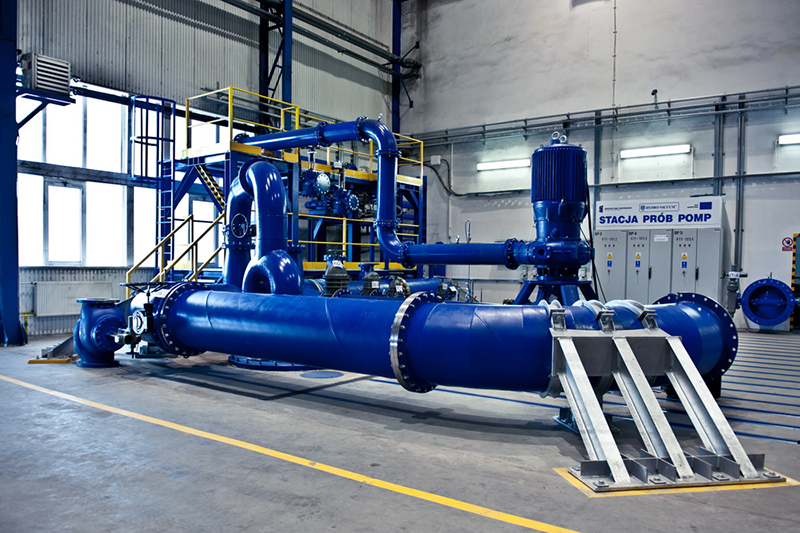
Typical cross-section of a high-performance powder coating demonstrating uniform film distribution – critical for all powder coating material types.


Copyright © Zhejiang Huacai Advanced Material CO., LTD. All Rights Reserved. Powder Coating Manufacturers

 中文简体
中文简体 English